OUR APPROACH

Understanding what matters. Building what works. Managing reliably. Focused development.

  • First, determine where the value lies
    We start by asking where we can add value. Which outcome needs to improve, for whom, and why is that important to the organization? To clarify this, we choose an approach that fits the context. The Double Diamond is one such approach. For example, we use interviews, workshops, data analysis, and prototyping to test assumptions, identify risks early on, and substantiate decisions. Based on this, we work with the client to make a concrete decision about what we’re going to implement.
  • From Value to Working Software
    Product and engineering work together with the customer to translate those choices into working software. Product brings together goals and priorities; engineering monitors feasibility, architecture, and dependencies.We deliver in small, self-contained increments that can be quickly tested and validated. This allows us to identify progress, risks, and incorrect assumptions early on. Our platform and engineering standards provide a standardized technical foundation for onboarding, monitoring, and governance, among other things. This allows teams to focus on what is specific to the client and the solution.
  • Reliable management, even after going live
    When it comes to business-critical IT, continuity must not depend on ad hoc agreements or individual expertise. That is why we organize management based on fixed standards, clear responsibilities, and continuous monitoring. Our platform supports this approach by providing a standardized foundation for monitoring, governance, and the recording of operational information, among other things. This provides structural insight into availability, quality, security, and costs—rather than only when something goes wrong. We can assume this responsibility for systems we develop ourselves, as well as for existing business-critical IT systems for which we are able and willing to continue bearing that responsibility.
  • Continuous development based on what is actually happening
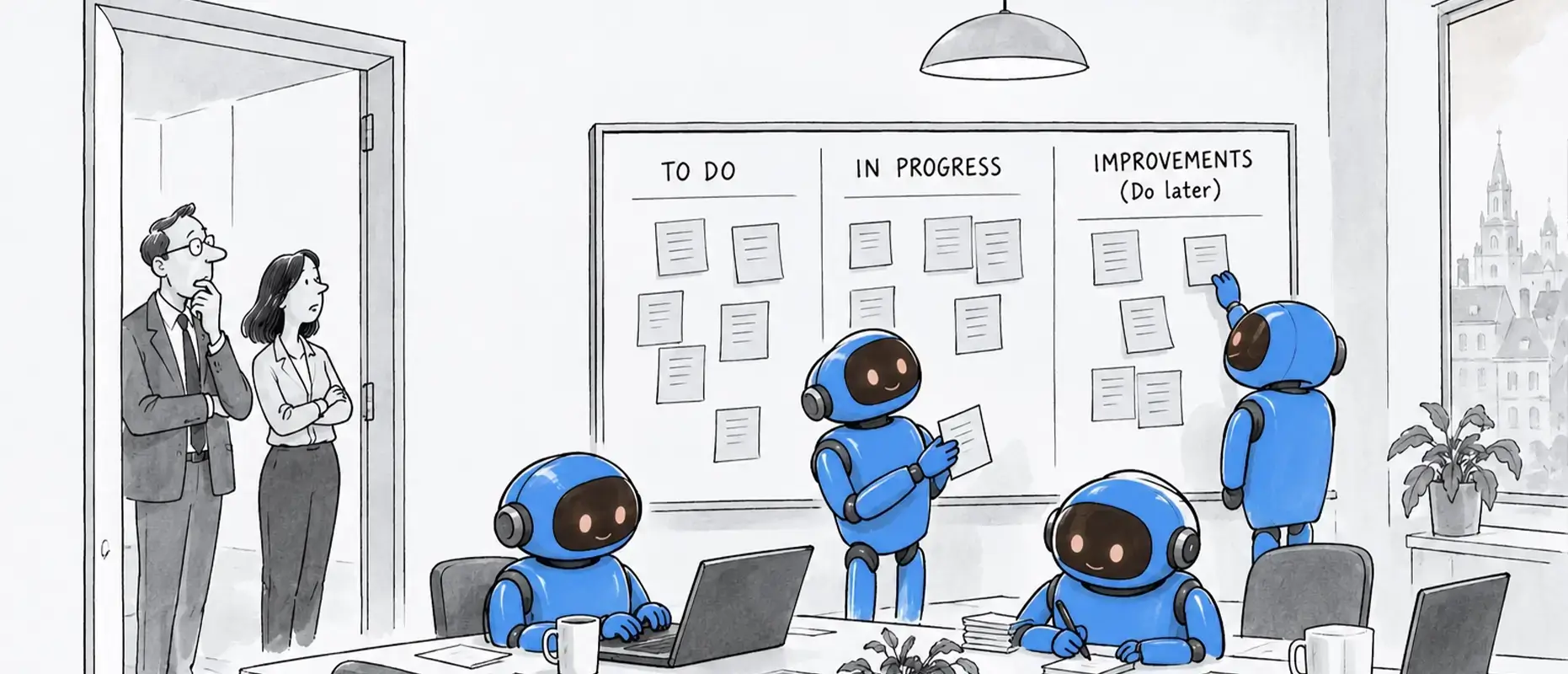
    Once a system is in use, new information emerges regarding performance, usage, costs, and risks. We use that information together with the client to determine where further development adds the most value.In this way, we base improvements not only on wishes or assumptions, but also on what the system demonstrates in practice. Management is therefore not an end in itself, but rather input for targeted further development.

CASE STUDIES

See what we've accomplished for our clients.